
I Took Tylenol Almost Every Day For 14 Years. A Nurse Asked Me One Question That Changed How I Think About It.


I'm 41. I left my warehouse job back in 2011, but my lower back never really left with it. The pain has been with me almost every day since.
Somewhere along the way I stopped counting the tablets. Then one night I caught myself standing over the recycling bin, counting the empty bottles instead. My husband walked past and saw me doing it. He didn't say a word. That silence told me he'd noticed a long time ago. And what bothered me most wasn't the pain. It was that I honestly did not know the number.
The question I couldn't answer
A few months later I ended up in the ER for something unrelated. A stomach thing. The nurse ran through the usual questions, then got to my medications.
I braced for the one I always dread — how many do you take? But she didn't ask that.
She asked, "How long have you been taking it?"
I opened my mouth and nothing came out. I could guess the dose. I could not tell her how many years. Ten? Twelve? More? That blank space was the moment something shifted.
What nobody had told me
Here is something I learned later that no one had ever mentioned to me. Acetaminophen — the active ingredient in Tylenol — is the leading cause of acute liver failure in the United States.
Not alcohol. Not some rare disease. A pill sold on every shelf, in every gas station.
Most people who take it every day have never once been told that. I certainly hadn't. I'm not writing this to scare you. It's just a fact, and I think it's worth knowing.
What actually happens in your liver
Here's the part that finally made sense to me. Every dose of acetaminophen your body breaks down creates a small amount of a toxic byproduct called NAPQI.
Your liver knows how to handle it. It neutralizes NAPQI using something called glutathione — an antioxidant your body makes and keeps in reserve.

Take one dose and your liver cleans it up overnight. No problem. But take it every day for years, and you're spending that reserve faster than you rebuild it.
Researchers have measured this depletion starting around 2,000mg a day. That's two extra-strength tablets, three times a day. I was often right there.
Why my bloodwork looked fine
Now, I'd had bloodwork done. My liver panel came back clean every single time, and I used that as proof I was fine. Maybe you've done the same.
Here's what I didn't understand. A standard liver panel measures damage that has already happened — enzymes that leak out when cells are hurt. It does not measure how much glutathione you have left in the tank.

So the reserve can be running low for years while your bloodwork still looks perfect. A clean panel wasn't the green light I thought it was. It was just measuring the wrong thing.
The fact that made it click
The thing that convinced me wasn't a study. It was one simple fact about emergency rooms.
When someone overdoses on acetaminophen, doctors have an antidote they give right away. And the way that antidote works is by flooding the body with what it needs to rebuild glutathione — fast.
Read that again. The official hospital treatment for the worst-case version of what I was doing every day works by restoring the exact reserve I'd been quietly draining. Same system, just faster.
That's when I stopped arguing with myself.
Why my first attempt failed
So I did the obvious thing. I bought a bottle of glutathione capsules off the shelf. 150mg each. I took them for a month, felt absolutely nothing, and decided the whole category was a scam.
Turns out I was half right. Here's what I didn't know: glutathione is fragile. Swallow it in a capsule and most of it gets destroyed by stomach acid before it ever reaches your blood. And most capsules only hold 100 to 250mg to begin with.

So I wasn't wrong that it didn't work. I was wrong about why. It wasn't the glutathione. It was how it was getting in.
What I use now
What I use now is AEVO Liposomal Glutathione. Two things make it different.
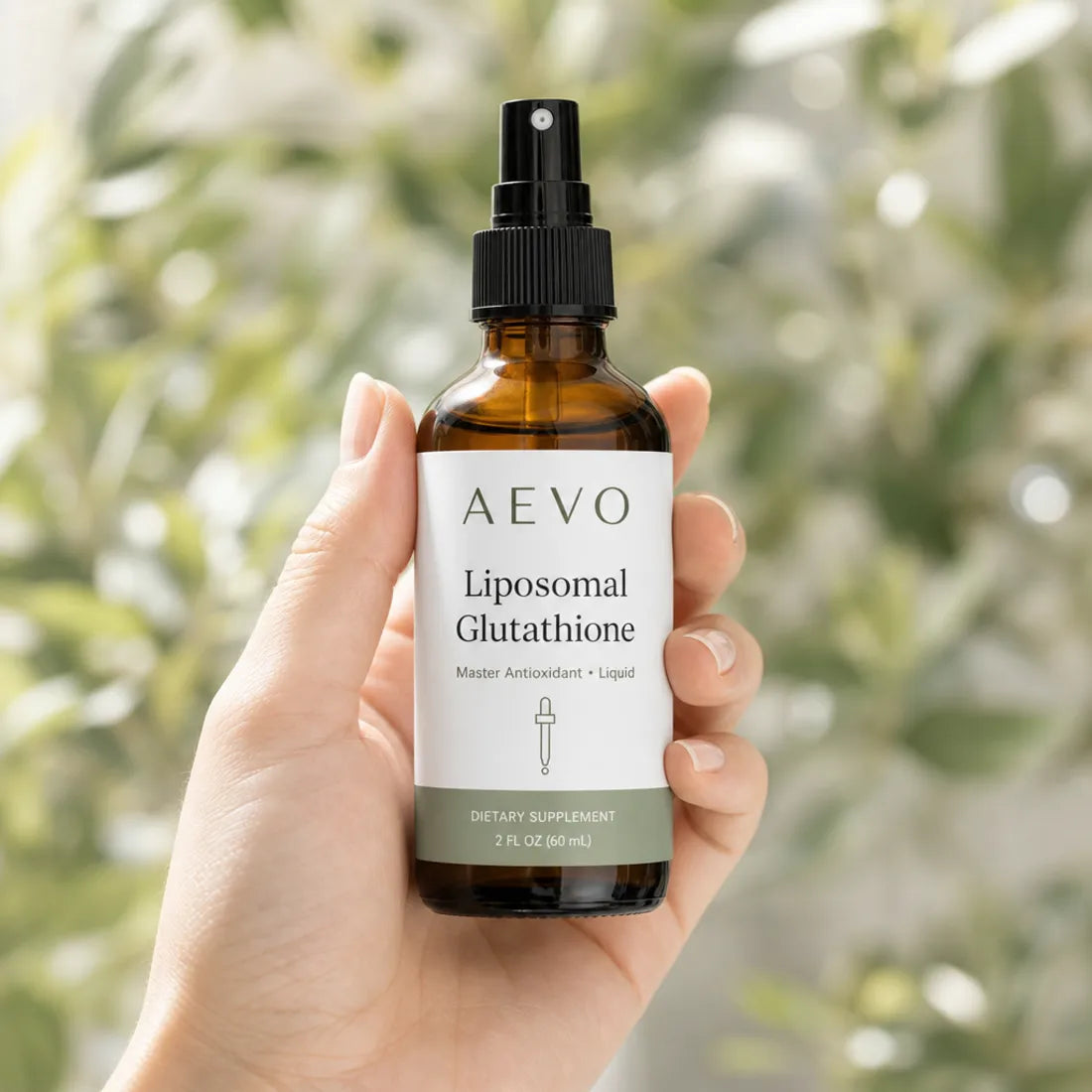
First, it's over 600mg per serving — several times what those capsules had. Second, it's a spray you hold under your tongue. It absorbs right there in your mouth and never has to survive your stomach. Two sprays, wild cherry, takes a few seconds.
I want to be honest with you. This does not fix my back, and I still take painkillers. That's not what it's for. It's for the reserve underneath all of it.
Right now, for July, they're running a good deal: 20% off, free shipping, and buy 2 get 1 free. It still comes with a 60-day money-back guarantee, so you can send back the empties and still get your money.
Act fast, though. Last time I went to buy more, they were sold out.
Where I landed
I'm not giving up my painkillers. I need them, and that's the honest truth.
I just stopped assuming the account they draw from is bottomless.
These statements have not been evaluated by the FDA. This product is not intended to diagnose, treat, cure, or prevent any disease. Consult your doctor before starting any supplement, particularly if you take medication regularly.